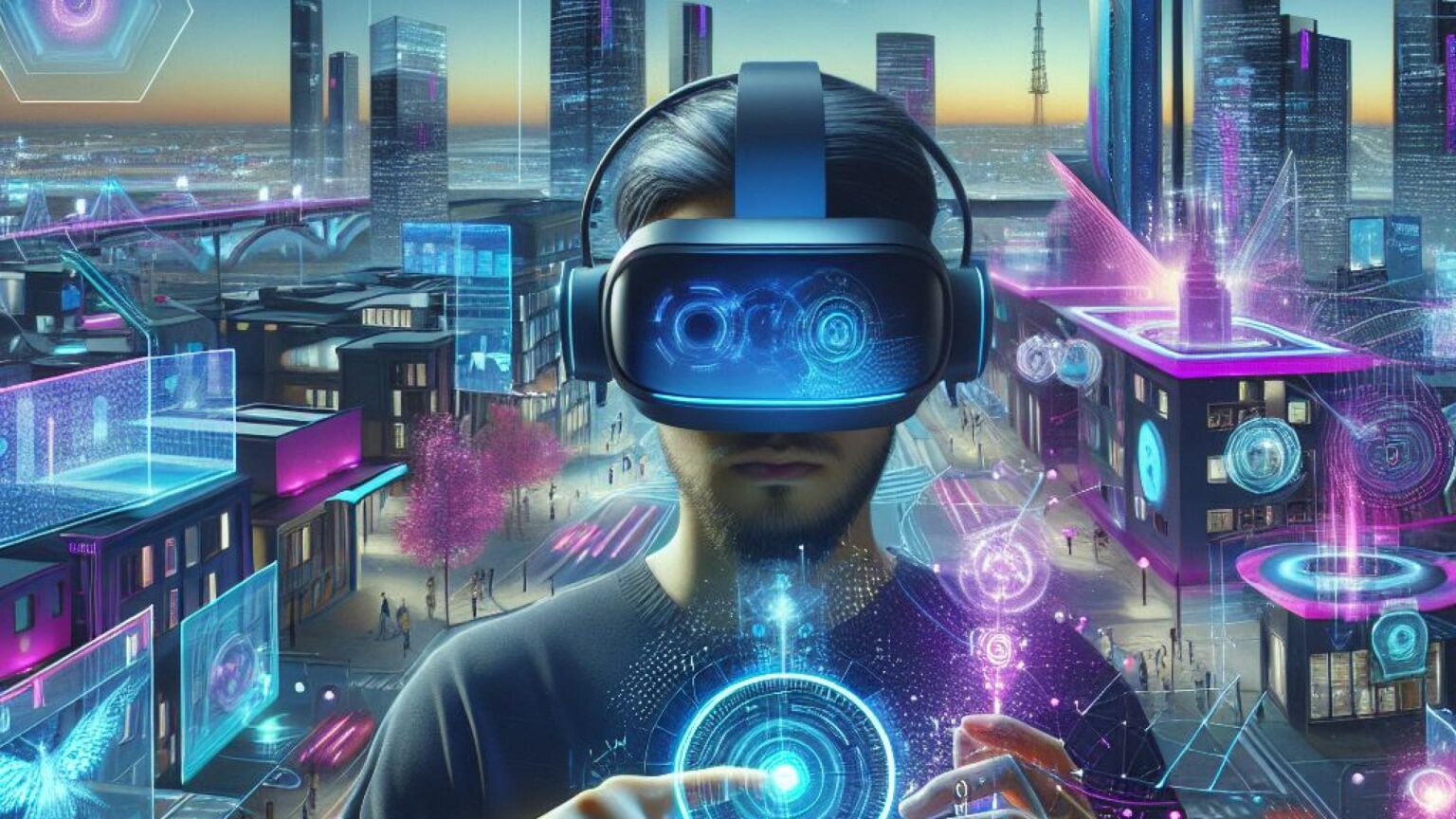
The metaverse represents one of the most ambitious ideas in modern technology: a digital environment where people can meet, communicate, work, learn, create, and explore experiences that go beyond traditional websites and applications. By combining technologies such as virtual reality, augmented reality, three-dimensional graphics, and artificial intelligence, the metaverse aims to make digital interactions feel more immersive and interactive.
Although the concept has attracted enormous attention, the metaverse is not a single website or one universal virtual world. It is better understood as a developing collection of technologies, platforms, and experiences that may become more connected over time.
Some applications already allow people to attend virtual events, explore digital environments, design virtual objects, and collaborate in shared three-dimensional spaces. However, a fully connected metaverse in which people and digital assets move freely between different platforms remains a work in progress.
Understanding the metaverse means looking beyond futuristic graphics and virtual reality headsets. It requires examining the technologies that support it, the industries that could benefit from it, the challenges that remain, and the ways it may influence everyday life.
What Is the Metaverse?
The metaverse is a broad term for persistent, interactive digital environments where people can participate through avatars, digital representations of themselves, or other interfaces. Depending on the platform, users may communicate with others, explore virtual locations, play games, attend meetings, purchase digital items, or interact with simulated objects.
Unlike a conventional website, which usually presents information through pages, images, and videos, a three-dimensional virtual environment can allow users to move through a space and interact with objects within it.
Imagine attending a meeting in a virtual conference room. Instead of seeing colleagues in a grid of video-call windows, you might see their avatars seated around a table, examine a three-dimensional product prototype, and manipulate a shared presentation together.
Another example is a virtual museum where visitors explore digital recreations of historical places, inspect artifacts from different angles, and interact with educational exhibits without physically traveling to the location.
These examples illustrate the central idea: digital experiences can become more spatial, interactive, and collaborative.
Is the Metaverse the Same as Virtual Reality?
Not exactly. Virtual reality is a technology that can provide access to immersive digital environments, usually through a headset. The metaverse is a broader concept that may use virtual reality but does not depend on it exclusively.
People can access some metaverse-style experiences using computers, smartphones, tablets, or mixed-reality devices. A headset may increase the feeling of immersion, but it is not a requirement for every virtual world.
It is also important to distinguish the metaverse from ordinary online gaming. Some multiplayer games already contain persistent worlds, social communities, user-created content, and digital economies. These features overlap with the metaverse concept, although not every online game is intended to function as an open or interconnected digital environment.
The boundaries remain flexible because the metaverse is still evolving.
The Technologies That Make the Metaverse Possible
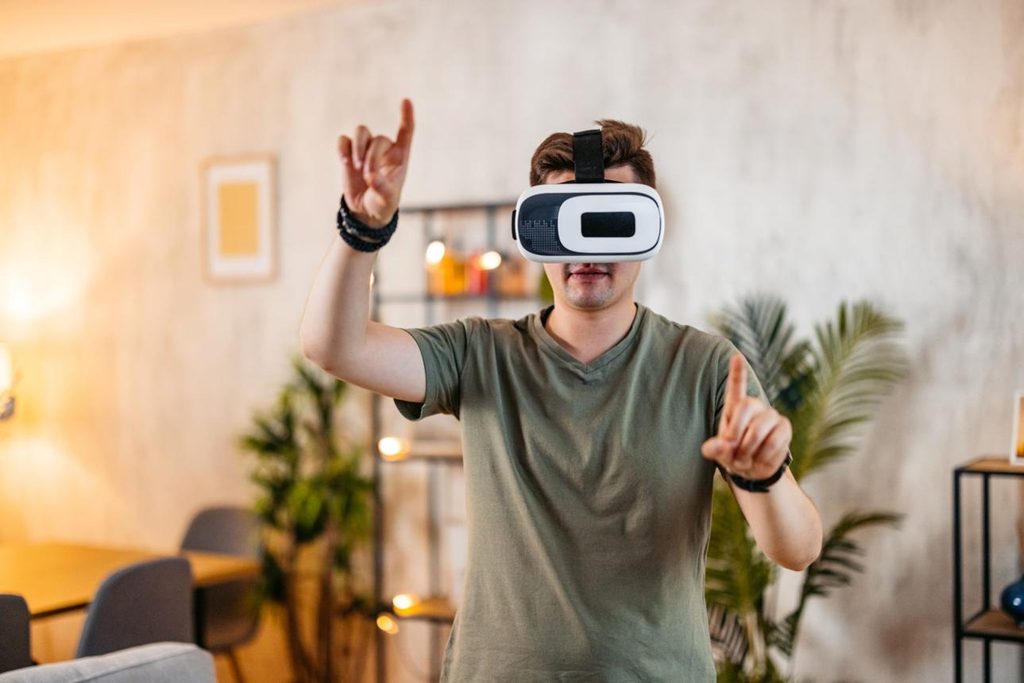
Image suggestion: a person using a VR headset. Free photo source: Unsplash virtual reality collection. Check the individual image’s license before publishing.
The metaverse depends on several technologies working together. No single invention creates it on its own. Instead, hardware, software, connectivity, and digital content combine to deliver interactive experiences.
Virtual Reality
Virtual reality, commonly known as VR, places users inside computer-generated environments. A headset displays images in front of the eyes and tracks head movements, allowing the virtual perspective to change as the user looks around.
More advanced systems also track hand movements and body position. Some provide controllers or other equipment that lets users pick up virtual objects, point at menus, or interact with simulated environments.
VR can support gaming, virtual tourism, professional training, educational simulations, and remote collaboration. Its primary advantage is immersion: users can feel as though they are occupying a digital space rather than simply looking at a screen.
Augmented Reality
Augmented reality, or AR, adds digital elements to the physical world. A smartphone can display virtual furniture in a real room, for example, or show information over a live camera image.
AR differs from VR because it does not necessarily replace the user’s surroundings. Instead, it combines real-world views with digital information.
In a future metaverse ecosystem, augmented reality could allow people to interact with virtual objects while walking through physical spaces, working in offices, or visiting public attractions.
Mixed Reality
Mixed reality combines elements of physical and digital environments in ways that can allow virtual objects to appear anchored in real spaces and respond to the user’s movements.
For example, an engineer might examine a three-dimensional machine model positioned over a real workbench. A team could inspect the same design from different viewpoints and discuss modifications before manufacturing a physical prototype.
The precise capabilities depend on the device and software. Mixed reality is an important part of the broader family of immersive technologies often called extended reality, or XR.
Artificial Intelligence
Artificial intelligence can make virtual environments more responsive and useful. AI-powered characters may respond to questions, help users navigate unfamiliar spaces, or provide personalized instruction.
AI can also assist with generating three-dimensional objects, translating conversations, moderating online communities, and adapting learning experiences to individual needs.
However, AI-generated content introduces challenges involving accuracy, privacy, impersonation, and harmful behavior. Virtual characters should not automatically be treated as reliable sources of information simply because they appear realistic or speak naturally.
High-Speed Internet and Cloud Computing
Interactive digital environments require computing resources, reliable networking, and systems capable of delivering visual information with minimal delay.
Cloud computing can support complex applications and shared experiences, while improvements in internet connectivity can make remote collaboration more practical.
Nevertheless, network speed alone does not guarantee a good experience. Device performance, software optimization, server capacity, and connection stability also matter.
Three-Dimensional Graphics and Digital Twins
Three-dimensional graphics allow developers to construct digital environments, objects, and avatars. These virtual assets can range from simple cartoon-style models to detailed simulations of buildings, factories, or entire cities.
A digital twin is a virtual representation of a physical object, process, or system that can be connected to real-world data. Digital twins can help organizations visualize equipment, monitor operations, and test potential changes.
Although digital twins and the metaverse are not identical concepts, they can complement one another when realistic three-dimensional models are used in collaborative environments.
How the Metaverse Can Be Used in Everyday Life
The metaverse is often associated with entertainment, but its potential extends into education, healthcare, business, manufacturing, tourism, and creative industries. The usefulness of each application depends on whether an immersive environment solves a real problem better than existing tools.
Education and Virtual Classrooms

Virtual environments can make lessons more interactive by allowing students to explore places and concepts that would otherwise be difficult, expensive, or dangerous to experience.
A history class could explore a reconstruction of an ancient city. Biology students could examine a three-dimensional model of a cell. Astronomy students could travel through a simulated solar system and observe the relative positions of planets.
Virtual laboratories could also allow students to practice procedures repeatedly without consuming physical materials.
Teachers would still need to consider accessibility, lesson quality, screen time, and the cost of equipment. An immersive lesson is not automatically better than a well-designed classroom activity. The educational value comes from how the technology supports learning.
Healthcare and Medical Training
Healthcare professionals can use virtual simulations to practice procedures, examine anatomical models, and prepare for complex situations. Simulated environments may provide opportunities to repeat exercises and receive feedback without exposing patients to the risks of inexperienced practice.
Immersive technologies may also support certain rehabilitation programs, pain-management approaches, and therapeutic activities under appropriate professional supervision.
However, medical applications require careful testing, clinical oversight, and protection of sensitive patient information. A virtual experience should not be assumed to replace an in-person examination or qualified medical care.
Business and Remote Collaboration
Companies can use shared virtual environments for meetings, training, product demonstrations, and design reviews. Teams working in different locations may inspect the same three-dimensional model and discuss details from multiple perspectives.
For example, architects could present a building design at full scale, allowing clients to explore rooms before construction begins. Manufacturers could use virtual training environments to teach employees how to operate complex equipment.
The main question for businesses is whether these tools provide enough value to justify their costs. For many ordinary meetings, a traditional video call remains simpler and more convenient.
Gaming and Digital Entertainment
Gaming is one of the clearest examples of persistent digital environments. Players can explore virtual worlds, cooperate with others, personalize avatars, and participate in shared activities.
Metaverse-style entertainment can extend beyond games to concerts, social gatherings, interactive storytelling, and virtual exhibitions.
These experiences may offer new ways for artists and creators to reach audiences. However, the commercial success of any platform depends on the quality of the experience, the size of its community, its business model, and whether users continue returning after the initial novelty fades.
Shopping and Virtual Commerce
Virtual stores can allow customers to explore products in three dimensions, customize items, and examine digital representations before making a purchase.
For instance, shoppers could visualize furniture in a room, inspect a virtual vehicle, or explore different product configurations. Augmented reality can support some of these activities directly on a smartphone.
Businesses may also create digital goods for avatars and virtual environments. Clothing, accessories, artwork, and other virtual items can become part of a platform’s economy.
The challenge is ensuring that digital shopping provides meaningful benefits instead of adding unnecessary steps to an otherwise simple purchase.
Tourism and Cultural Experiences
Virtual tourism can provide access to destinations that are distant, costly, difficult to reach, or temporarily unavailable. Museums can build interactive exhibitions, and cultural organizations can reconstruct historical locations.
These experiences can support learning and help people decide which destinations they would like to visit physically. They may also improve access for people who face mobility or travel barriers.
Still, virtual tourism does not fully reproduce the sensory experience of visiting a place in person. Its strongest role may be to complement physical travel rather than replace it.
The Potential Benefits of the Metaverse
The metaverse could provide several benefits if its technologies become affordable, accessible, reliable, and useful.
More immersive communication. Shared three-dimensional spaces may help people collaborate on spatial tasks that are difficult to explain through ordinary video calls.
New learning opportunities. Simulations can make abstract ideas more concrete and give learners a safe place to practice specific skills.
Reduced travel for selected activities. Virtual meetings, remote product demonstrations, and simulated training may reduce the need for certain business trips.
New creative opportunities. Designers, educators, developers, artists, and independent creators may develop experiences and digital products for new audiences.
Improved visualization. Three-dimensional models can help teams understand designs, equipment, buildings, and other complex systems before making expensive real-world changes.
Alternative forms of participation. Some virtual environments may offer people new ways to attend events, communicate, or access educational and cultural resources.
These benefits are possibilities rather than guarantees. Results depend on thoughtful design, appropriate technology, user needs, and the quality of implementation.
The Risks and Challenges of the Metaverse

Image suggestion: a VR user for a section about privacy and online safety. Free image collections are available from Pexels. Select an individual image and confirm its license before use.
Despite its possibilities, the metaverse faces important technical, financial, social, and ethical challenges. Addressing these issues will influence whether immersive digital environments become useful everyday tools or remain specialized experiences.
Privacy and Personal Data
Immersive devices may collect more than conventional websites do. Depending on the hardware and software, data can include head movements, hand movements, spatial information, voice recordings, eye tracking, and interaction patterns.
Such information can reveal sensitive details about a person’s behavior and surroundings. Organizations must explain what they collect, why they collect it, how long they retain it, and whether it is shared with third parties.
Users should review privacy settings, grant only necessary permissions, and be cautious about sharing personal information in unfamiliar environments.
Cybersecurity and Identity Theft
Virtual platforms can face account theft, scams, harassment, impersonation, malicious software, and fraudulent transactions.
A realistic avatar or voice does not necessarily prove that someone is who they claim to be. Users should protect their accounts, use strong authentication where available, and verify suspicious requests before sending money or revealing sensitive details.
Platform operators also need clear reporting procedures and effective systems for responding to abusive or fraudulent behavior.
Harassment and Online Safety
The feeling of physical presence can make some virtual interactions more intense than ordinary online communication. Unwanted proximity, threatening gestures, repeated harassment, and other forms of abuse may occur in immersive spaces.
Useful safeguards include personal boundaries, blocking tools, moderation systems, clear community rules, and accessible ways to report misconduct.
Platforms should design these protections into the experience rather than treating them as optional additions.
Physical Comfort and Accessibility
VR headsets can cause discomfort, fatigue, or motion sickness for some users. Extended sessions may also contribute to eye strain or reduce awareness of the physical surroundings.
People with different physical, sensory, or cognitive needs may encounter barriers if an application depends on specific movements, visual cues, or expensive equipment.
Developers should provide accessible controls, flexible interaction methods, appropriate safety guidance, and alternatives for people who cannot or do not wish to use a headset.
Cost and the Digital Divide
High-quality headsets, compatible computers, reliable internet connections, and specialized software can be expensive.
If essential services move into immersive environments without accessible alternatives, people with limited resources could be excluded. The same problem can affect schools, small businesses, and communities with inadequate connectivity.
Wider adoption will require attention to affordability, device compatibility, accessible design, and non-immersive ways to participate.
Interoperability and Fragmentation
Different virtual platforms may use incompatible accounts, currencies, identity systems, formats, and digital assets. An item purchased in one environment might not work in another.
A more connected metaverse would require technical standards, compatible systems, and agreements about identity, ownership, security, and user rights.
These challenges are not purely technical. Companies also have commercial incentives to keep users and purchases within their own platforms.
The OECD’s 2025 policy research on immersive technologies discusses both their potential benefits and the need to address privacy, safety, and cybersecurity risks.
Is the Metaverse the Same as Web3, Cryptocurrency, or NFTs?
These concepts are related in some projects, but they are not interchangeable.
The metaverse describes immersive or shared digital environments.
Web3 is a broad term for approaches to internet applications that use decentralized technologies, often including blockchain.
Cryptocurrency refers to digital assets designed to function as a medium of exchange or store of value within particular systems.
Non-fungible tokens (NFTs) are blockchain-based tokens that can represent unique digital or physical assets. An NFT may be used to represent a digital collectible, but its existence does not automatically establish legal ownership of the underlying artwork or guarantee its value.
A virtual world can operate without cryptocurrency or NFTs. Likewise, a blockchain application does not need a three-dimensional environment to function.
Some projects combine these technologies to support digital transactions, asset records, or virtual economies. However, users should evaluate each project’s actual functionality, costs, security, and terms rather than assuming that blockchain is necessary for every metaverse experience.
How Digital Ownership Works in Virtual Worlds
Ownership is an important issue because people may invest time and money in digital clothing, virtual land, collectibles, and other assets.
In a conventional platform, purchases are generally governed by the platform’s account system and terms of service. The ability to use an item may depend on the company’s continued operation and its rules.
Blockchain-based systems can record transactions on a distributed ledger. This may provide a publicly verifiable record of certain token transfers, but it does not guarantee that an asset will be usable across different platforms.
Does Buying Virtual Land Mean You Own Real Property?
No. Virtual land usually represents a digital asset or permission to use a defined space within a particular platform. It does not automatically confer ownership of physical land or real estate.
Its practical value depends on factors such as platform rules, user demand, technical infrastructure, and the continued availability of the environment.
People considering virtual purchases should understand the relevant terms and avoid treating speculative digital assets as guaranteed investments.
How to Explore the Metaverse for Beginners

You do not need to buy expensive equipment to begin learning about the metaverse. A practical approach is to start with accessible experiences and identify what interests you.
Step 1: Decide What You Want to Do
Consider whether your interest is in gaming, social interaction, education, digital art, professional collaboration, or virtual tourism. Different platforms are designed for different purposes.
Step 2: Start With Your Existing Device
Explore browser-based virtual environments or applications compatible with your computer or smartphone. This helps you understand the experience before investing in specialized hardware.
Step 3: Research Platforms and Requirements
Check device compatibility, account requirements, subscription costs, privacy policies, age restrictions, and community rules. Look for clear information about how accounts and purchases are managed.
Step 4: Protect Your Account
Use a strong, unique password and enable additional authentication when available. Avoid suspicious links, unverified downloads, and requests for sensitive information.
If a platform offers virtual purchases, understand its refund policies and whether digital items can be transferred or recovered.
Step 5: Explore Gradually
Start with short sessions and pay attention to comfort, accessibility, and the quality of the experience. If you use a headset, follow the manufacturer’s safety guidance and maintain a clear physical space.
Step 6: Evaluate the Actual Benefits
Ask yourself whether the experience helps you learn, collaborate, create, or enjoy something in a way that is meaningfully better than an ordinary application.
The most valuable technology is not necessarily the most futuristic one. It is the one that serves a real purpose.
What Does the Future of the Metaverse Look Like?
The future of the metaverse is likely to depend on gradual improvements across several areas rather than the sudden arrival of one universal digital world.
More Natural Interfaces
Headsets and other immersive devices may become lighter, more comfortable, and easier to use. Improvements in tracking, displays, and interaction methods could make digital environments more practical for everyday tasks.
The speed and direction of these improvements remain uncertain, and cost will continue to influence adoption.
AI-Powered Digital Environments
AI may help create virtual assistants, responsive educational characters, personalized environments, and tools for building digital content.
It could also reduce the technical expertise required to develop virtual experiences. At the same time, developers will need safeguards against misinformation, impersonation, and the misuse of personal data.
Greater Use of Digital Twins
Businesses may increasingly use digital representations of factories, buildings, equipment, and infrastructure to support planning, maintenance, and training.
These applications do not require every participant to enter a fully immersive virtual world. In many cases, a combination of dashboards, three-dimensional models, and specialized simulations may be more practical.
Better Connections Between Digital Platforms
Shared standards could eventually make it easier to transfer certain identities, content, or assets between compatible systems.
However, genuine interoperability requires agreement on technical standards, security, ownership rights, and business models. It should not be assumed that all platforms will become interconnected.
More Practical Everyday Applications
The strongest long-term opportunities may come from specific uses that solve real problems: training workers, visualizing designs, teaching complex subjects, assisting remote teams, or improving access to cultural experiences.
A successful future metaverse would not necessarily require people to spend all day inside virtual environments. It may instead become a collection of useful digital tools that people choose when they offer a clear advantage.
Research published in 2026 reviewing metaverse and extended-reality applications likewise describes potential benefits in education, training, and medicine while noting that technological, usability, health, and social challenges remain.
Conclusion: The Metaverse Is an Opportunity, Not a Finished Destination
The metaverse brings together technologies that can make digital experiences more immersive, interactive, and collaborative. Its potential reaches far beyond gaming, with possible applications in education, healthcare, business, entertainment, design, and tourism.
At the same time, it faces significant challenges involving privacy, security, affordability, accessibility, and the connection between different platforms. Its future will depend on whether developers can address these problems while creating experiences that people genuinely find useful.
Rather than viewing the metaverse as a guaranteed technological revolution, it is more realistic to see it as an evolving field. Some applications are already useful, others are still experimental, and the idea of one seamless digital universe remains an ambition rather than an established reality.
The most important question is not whether everyone will eventually live in a virtual world. It is whether immersive technology can help people learn, work, communicate, and create in better ways while preserving their privacy, freedom, and connection to the physical world.