Understanding Forex: The World’s Largest Financial Market
Forex, short for foreign exchange, refers to the global marketplace where currencies are bought and sold. Forex operates 24 hours a day, five days a week, and it is widely regarded as the largest and most liquid financial market in the world. According to the Bank for International Settlements, the average daily trading volume in the global foreign exchange market exceeded $7.5 trillion in its most recent triennial survey. That staggering figure illustrates the scale and importance of Forex in the modern financial system.
Unlike stock markets that operate through centralized exchanges, Forex trading takes place over the counter (OTC). This means transactions occur directly between parties, typically through electronic networks of banks, brokers, institutions, and individual traders. As a result, Forex remains accessible to participants of all sizes, from multinational corporations hedging currency exposure to retail traders speculating on short-term price movements.
Because Forex influences global trade, investment flows, and economic stability, it plays a foundational role in the global economy. Every time a company imports goods or an investor diversifies into foreign assets, Forex markets facilitate the currency conversion.
How Forex Trading Works
At its core, Forex trading involves buying one currency while simultaneously selling another. Currencies are quoted in pairs, such as EUR/USD or GBP/JPY. The first currency in the pair is known as the base currency, while the second is the quote currency.
For example, if EUR/USD is trading at 1.10, it means one euro equals 1.10 US dollars. If a trader expects the euro to strengthen against the dollar, they may buy the pair. Conversely, if they anticipate euro weakness, they may sell it.
Major Currency Pairs
Forex trading typically revolves around three categories of currency pairs:
- Major pairs: Involving the US dollar and another major currency, such as EUR/USD or USD/JPY.
- Minor pairs: Excluding the US dollar but including other major currencies.
- Peculiar pairs: Pairing a major currency with a currency from an emerging market.
Major pairs tend to have higher liquidity and tighter spreads. Consequently, many beginners focus on these pairs due to lower transaction costs.
Why It Attracts Traders Worldwide
Forex appeals to traders for several reasons. First, the market offers high liquidity, which allows trades to be executed quickly. Second, Forex brokers often provide leverage, enabling traders to control larger positions with relatively small capital.
However, leverage can amplify both gains and losses. Therefore, understanding risk management becomes essential before entering Forex markets.
Additionally, Forex trading provides flexibility. Since the market operates across major financial centers—from Asia to Europe to North America—traders can choose timeframes that align with their schedules.
The Role of Central Banks
Central banks significantly influence Forex markets. Monetary policy decisions, such as interest rate changes and quantitative easing, can move currency values rapidly.
For instance, when the Federal Reserve adjusts interest rates, it often affects the value of the US dollar. Higher interest rates may attract foreign capital, strengthening the currency. Conversely, lower rates may weaken it.
Similarly, institutions like the European Central Bank guide the euro through policy measures. Forex traders closely monitor central bank announcements because unexpected policy shifts can create volatility.

Key Factors That Influence Forex Prices
Several interconnected factors shape price movements:
Economic Indicators
Economic data releases frequently drive volatility. Important indicators include:
- Gross Domestic Product (GDP)
- Inflation rates
- Employment data
- Consumer confidence reports
Strong economic data may boost a currency, while weak data may pressure it downward.
Geopolitical Events
Political instability, trade tensions, and elections can impact Forex markets. For example, during the United Kingdom’s decision to leave the European Union, the British pound experienced sharp fluctuations following the Brexit referendum.
Market Sentiment
Investor psychology plays a crucial role in trading. When markets exhibit risk-on sentiment, traders often favor higher-yielding currencies. Conversely, during uncertainty, safe-haven currencies like the US dollar or Swiss franc may strengthen.
Popular Forex Trading Strategies
Forex traders rely on various strategies depending on their objectives and risk tolerance. Understanding these methods helps structure a disciplined approach.
Day Trading
Day trading involves opening and closing positions within the same trading day. Traders aim to capture small price movements without holding positions overnight. Because Forex markets are volatile, day trading requires constant monitoring and quick decision-making.
Swing Trading
Swing trading focuses on capturing medium-term trends. Positions may remain open for several days or weeks. Traders use technical analysis and economic data to identify entry and exit points.
Scalping
Scalping is a short-term Forex strategy that seeks to profit from small price changes. Scalpers may execute dozens of trades daily. While potential profits per trade are small, cumulative gains can add up. However, transaction costs and spreads must be considered carefully.
Position Trading
Position trading involves holding the trades for extended periods, sometimes months. Traders base decisions on macroeconomic trends and fundamental analysis rather than short-term price movements.
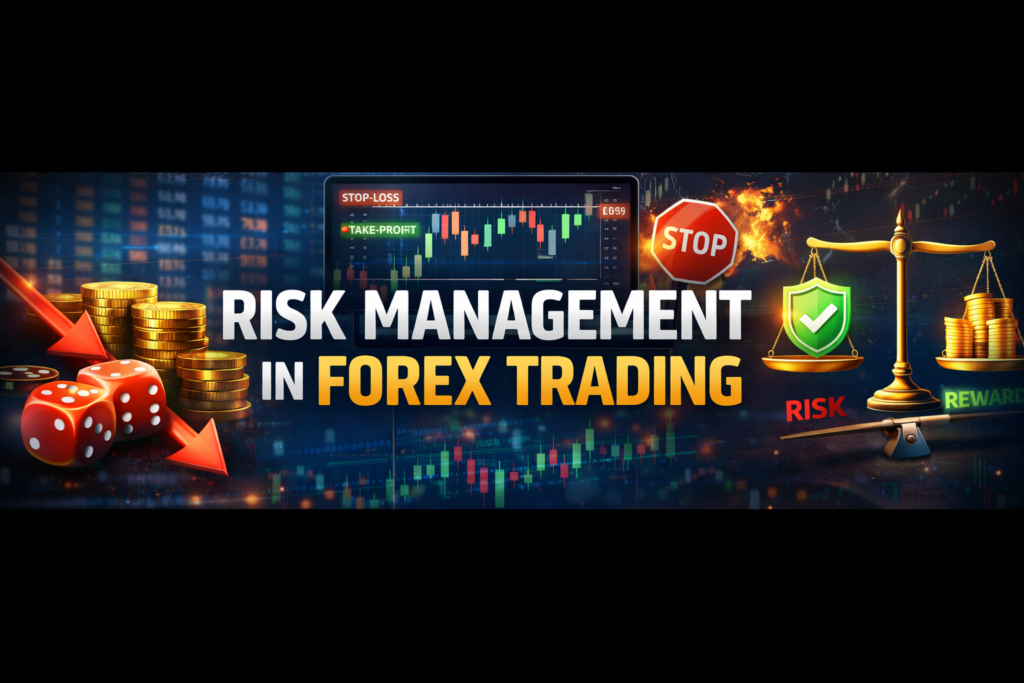
Risk Management in Forex Trading
Risk management remains one of the most critical aspects of Forex success. Many new traders focus solely on potential profits while underestimating risk exposure.
Stop-Loss and Take-Profit Orders
Stop-loss orders automatically close a position at a predetermined price to limit losses. Take-profit orders lock in gains once a price target is reached. These tools help maintain discipline and reduce emotional decision-making.
Position Sizing
Effective position sizing ensures that no single trade significantly damages the trading account. Many professionals risk only 1% to 2% of their capital per trade.
Leverage Awareness
While leverage enhances buying power, it also magnifies risk. According to regulatory authorities such as the Financial Conduct Authority, retail traders often lose money due to high leverage and insufficient risk control.
Understanding leverage mechanics and using conservative ratios can protect long-term capital.
The Technology Behind Modern Forex
Advancements in technology have transformed the trading. Electronic trading platforms allow individuals to access global markets instantly.
Algorithmic trading, automated strategies, and high-frequency trading systems have further increased market efficiency. These systems analyze vast data sets in milliseconds. However, retail traders should approach automated trading cautiously, ensuring they fully understand the strategy before deployment.
Moreover, mobile applications now enable Forex traders to monitor positions on the go. This accessibility has broadened participation worldwide.
Forex Regulation and Broker Selection
Choosing a regulated broker is essential in trading. Regulation enhances transparency and safeguards client funds.
When evaluating a Forex broker, consider:
- Regulatory oversight
- Trading platform reliability
- Transaction costs
- Customer support quality
- Deposit and withdrawal policies
Regulators in major financial centers enforce standards that protect retail traders. Therefore, verifying a broker’s licensing status should be a priority.

Psychological Discipline
Trading psychology often separates consistent traders from unsuccessful ones. Emotional reactions, such as fear and greed, can lead to impulsive decisions.
Developing a structured trading plan helps maintain discipline. Additionally, keeping a trading journal allows traders to evaluate performance objectively. Over time, identifying patterns in behavior can improve decision-making.
Forex markets move quickly. However, patience remains a valuable asset. Waiting for high-probability setups can reduce unnecessary losses.
Practical Example: A Simple Forex Trade Scenario
Consider a trader who expects the US economy to strengthen due to positive employment data. Anticipating a stronger dollar, they decide to sell EUR/USD.
They analyze charts, identify resistance levels, and set a stop-loss above the recent high. If the trade moves favorably, they gradually adjust their stop-loss to protect profits.
This example illustrates how Forex trading combines economic understanding, technical analysis, and risk management into a cohesive strategy.
Common Mistakes to Avoid
Even experienced traders make errors. However, recognizing common pitfalls can prevent costly setbacks.
- Overtrading without clear signals
- Ignoring economic calendars
- Using excessive leverage
- Neglecting risk-reward ratios
- Allowing emotions to dictate decisions
By avoiding these mistakes, Forex traders can build consistency over time.
The Future of Forex Markets
Forex continues to evolve alongside global economic changes. Emerging markets are gaining influence, digital trading platforms are advancing, and regulatory frameworks are adapting.
Moreover, global interconnectedness ensures that Forex remains central to international finance. As global trade expands, currency markets will continue facilitating transactions across borders.
Technological innovation may further enhance transparency and execution speed. However, the fundamental principles of supply and demand will always underpin Forex pricing.

Actionable Steps for New Forex Traders
For individuals interested in entering Forex markets, the following steps can provide a structured starting point:
- Learn core concepts through reputable educational resources
- Open a demo account to practice risk-free
- Develop a trading plan
- Implement strict risk management
- Start with small position sizes
- Continuously evaluate performance
Education and discipline are long-term advantages in Forex trading. While profits are possible, realistic expectations and consistent effort remain essential.
Final Thoughts
Forex represents a dynamic and highly liquid global marketplace. It offers opportunities for speculation, hedging, and diversification. However, it also demands knowledge, discipline, and prudent risk management.
By understanding how Forex operates, monitoring economic indicators, and applying structured strategies, traders can approach the market with greater confidence. Ultimately, sustainable success in Forex depends not on luck, but on preparation, strategy, and emotional control.
As global economies continue evolving, Forex will remain at the heart of international finance. Those who commit to continuous learning and responsible trading practices can navigate this vast market more effectively.